


The USA-Made Bars and Plates Nobody Is Telling You About
Made-in-the-USA fitness equipment is rare. Real made-in-the-USA fitness equipment is rarer still.
The label carries real weight with clients, so plenty of companies have been willing to risk claiming it. The FTC's standard is "all or virtually all" made in the United States, and since the Made in USA Labeling Rule took effect in 2021 the agency can assess civil penalties per violation, with every product page counting separately. Across industries, that's added up to millions in fees and fines for companies making the claim.
Even the biggest names in this business have been through it. Back in 2019 the FTC looked at one of the largest American strength manufacturers over exactly this issue: the marketing lumped together products made here, products assembled here from imported parts, and products simply imported. The file only closed after the company pulled down the overly-broad claims.
But that's the point. If a company with a real factory and American employees needs a cleanup on its origin language, what do you think is happening at the brands with no factory at all?
The claim is everywhere and the truth is buried three layers down in a supply chain that you can't see and very few people really understand.
The pandemic brands
Here's the part that really gets me.
The 2020 equipment shortage created dozens and dozens of new "manufacturers." They market hard on Facebook and Instagram, they have a logo and a founder story and a lot of flag imagery, But they are not manufacturers. They're importers. They literally pick an off-the-shelf design out of a factory catalog, choose a color, put their name on it, and ship it to a third-party warehouse.
I spend some time on home gym sites and in the equipment groups, and I watch this play out constantly. Somebody posts a careful comparison of two racks, weighing the merits, arguing about the welds and the upright thickness. And they don't know that both of them came off the same line in the same factory. Same tooling, same steel, same everything. The only real difference is the sticker and the markup. Nobody in the thread knows, because there's no way for them to know what is really going on.
There's no quality control in that arrangement either, because there's nobody to do it. Quality control means an engineer standing on a factory floor with the authority to stop a line. An importer has none of that. They have a purchase order, a container, and a spec sheet written in another language. The first time they learn a batch went bad is when the reviews start showing up, and by then it's already in your garage.
The part that actually costs you comes later, because when something breaks, there's no parts inventory, because there's no factory. The pop-pin, the pulley, the bushing, the replacement upright, it's all overseas, and your brand is a website placing an order and waiting on a container. That's assuming they're still in business. A lot of them aren't.
I've only been doing this 30 years. I've learned a few things.
At ConnectFit, our heritage and our industry integration give us a unique look at that supply chain. I know which brands are actually made here and which ones are quality, because I've had relationships with some of these manufacturers for decades. Others are brand-new companies breaking into the market with great ideas and manufacturing that's as good as anything out there.
We've partnered with a few of them. You should know who they are.
Solid Bar Fitness
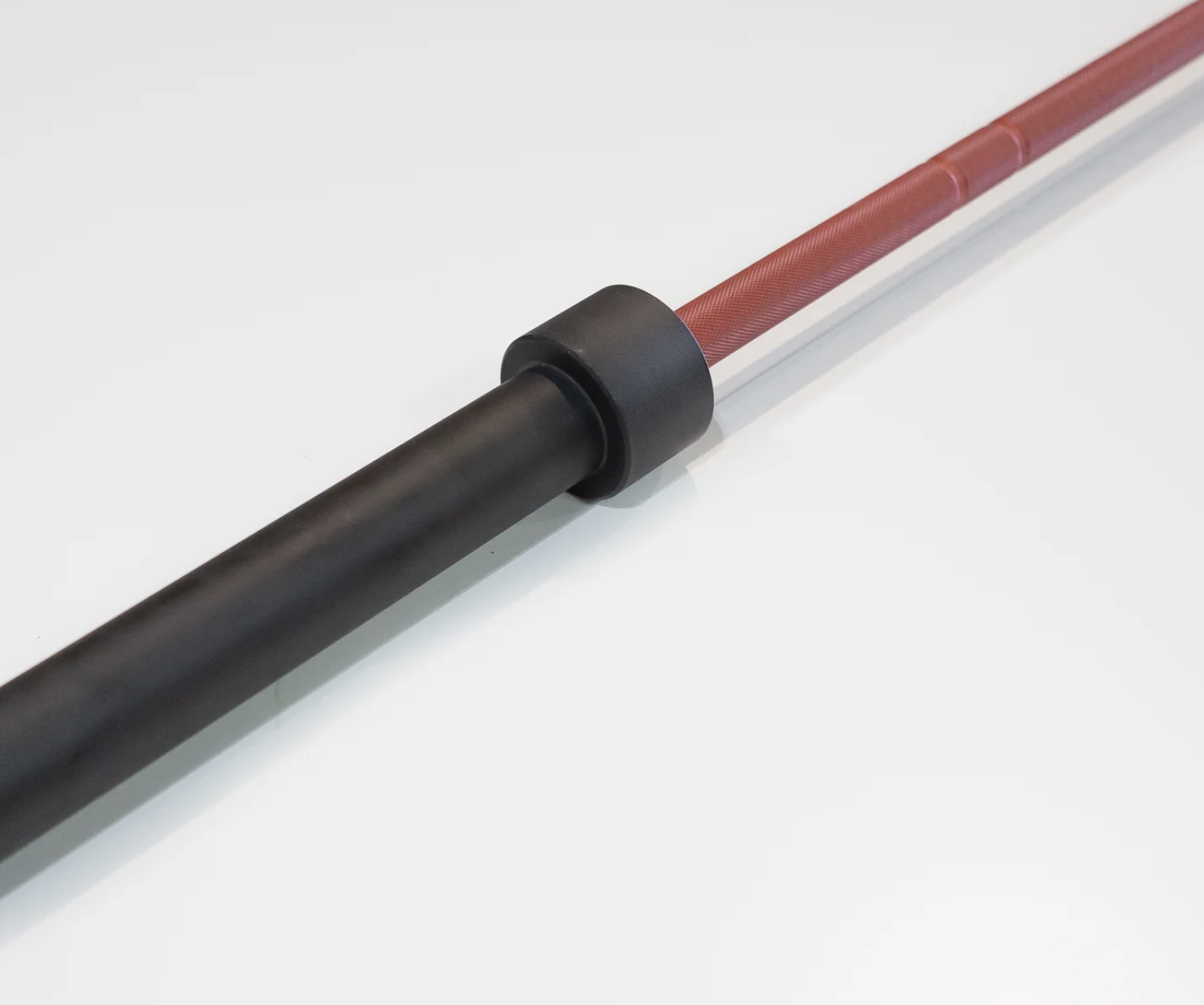
I recently reconnected with Solid Bar Fitness, a USA barbell manufacturer out of Waterville, Kansas. Independently owned and operated by the same family for over 30 years. American steel, American components, nothing brought in from overseas, lifetime warranty against manufacturing defects.
Here's what most people don't know: Solid Bar makes the bars for a lot of other companies as private label. If you've been shopping "USA-made" barbells online, there's a real chance you've been looking at a Solid Bar product with somebody else's name rolled onto the shaft and somebody else's markup on the price tag.
So we went to the source and removed a layer.
Power bars, Olympic bars, competition bars, specialty bars. Same manufacturing, same steel, same 30 years of experience, at a price nobody else is going to touch, because there's no middleman brand taking a cut on the way to you. See the bars here!
Weight It Out
One of my best trainers, Ryan at AnkFit in Newton, pointed me toward this one, and I'm glad he did. Ryan is opening a second studio in Newtonville and we've been a large part of that build, so he's had his hands on a lot of equipment lately. When somebody at that end of the business tells you a plate is different, it's worth a look.
Weight It Out makes the thinnest plates on the market. Not marginally thinner. Their 45-pound cast iron plate is three quarters of an inch thick. Their bumper plates use a solid steel core inside a compression-molded polyurethane shell instead of the usual rubber, which is why they're so dense and so thin. Ninety durometer, so they protect the floor without the trampoline bounce. And they're calibrated tight, within a quarter percent on steel.
The thinness isn't a gimmick. There's a real biomechanical advantage to it.
Two of them, actually. The obvious one is loading: you can fit more weight on the bar before you run out of sleeve, which matters even more on plate-loaded machines where the weight horns are shorter than a barbell sleeve. The one people miss is that thinner plates sit closer to the shaft. Concentrating the load inboard settles the bar down. Less swing, less whip, less of your attention going to balance and more of it going to the lift.
They're also making dumbbells, available with different handle sizes so you can set them up the way you actually want them.
And here's the one I didn't expect to like as much as I do: they'll engrave the plates. Names, dates, a team name, a phrase somebody earned. Up to 20 characters on the text option, and they'll do logos and full branding if you talk to them about it. One side keeps the Weight It Out mark, the other side is yours.
Think about that as a gift. Not a gift card, not another gadget that ends up in a drawer. A pair of American-made steel plates with somebody's name or their competition date cut into them, which they will load onto a bar for the next thirty years. For a lifter, that's not equipment. It's a trophy that gets used.
If that's on your list for the holidays, order now. Not in November. Now.
Here's why, and it's worth understanding because it applies to everything in this article. American-made in this industry means custom or small batch. There is no warehouse in New Jersey holding forty thousand of these waiting on your click. Somebody schedules a run, the steel gets cut, the plates get machined and calibrated and engraved, and then they ship. That's a six-week batch cycle, not a two-day fulfillment center.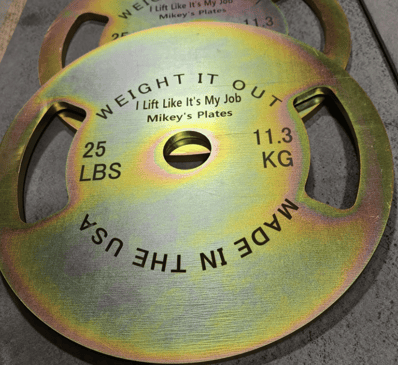
People have been trained by the offshore model to read a lead time as a problem. It isn't. It's the thing you're actually paying for. The container-ship brands can ship tomorrow because a factory you've never heard of already built ten thousand units on spec, and that same arrangement is exactly why nobody can find you a replacement part in three years.
Small batch cuts the other way. You wait a few weeks up front, and then the company that made it is still there, still running the same line, still holding the tooling. You're trading a little wait for a couple of decades of support.
So order early and let it be worth the wait.
The rest of the American bench
We work with a number of other USA manufacturers, and they deserve mention.
Hoist Fitness builds nearly all of its full-commercial equipment in San Diego. These are the companies that stayed when almost everybody else went offshore, and they've been doing it long enough that the quality argument makes itself.
Ivan at Ivanko is an old friend, and we've worked together for decades. Since 1967 they've been building free weight equipment in this country, and Ivan writes about his own manufacturing process better than I could summarize it, so go read it on his site if you want to understand what actually goes into a plate. I'll say what a friend says: it's a specialist operation, availability moves around, and when you want a specific Ivanko piece you want it because it's an Ivanko piece and you're willing to wait for it. That's a different conversation than the one this article is having.
The bars, plates, and dumbbells above are the accessible end of American manufacturing. Real domestic production at a price and a lead time that works for a garage or a facility floor you're outfitting this year. This is new American manufacturing, not just surviving American manufacturing.
Why it matters right now
Buy from these companies and you get three things at once.
You get the quality, which is the whole reason the label became valuable in the first place. You avoid tariffs, which are not a small line item anymore. And you put your money into manufacturing that happens here, in shops that employ people here.
That combination used to require a compromise somewhere. It doesn't anymore.
If you want to talk through what belongs in your facility, whether it's a full commercial floor or a garage that's about to get serious, that's what we do.
ConnectFit — 84 Needham Street, Newton, MA


COMMENTS